
Created by STORYBOARD
The Core Idea
A flat image can't be re-shot. So rebuild it as a 3D scene you can fly through, record the exact camera path you want, then feed that recording to Seedance as the movement reference.
- Pipeline: Original Scene → branded Main Scene → 3D scene → camera-guide recording → final video.
- The 3D scene exists for camera motion only — rough geometry and missing people are fine.
Step 1: Generate the Original Scene (GPT Image 2)
The base scene, built before any branding.
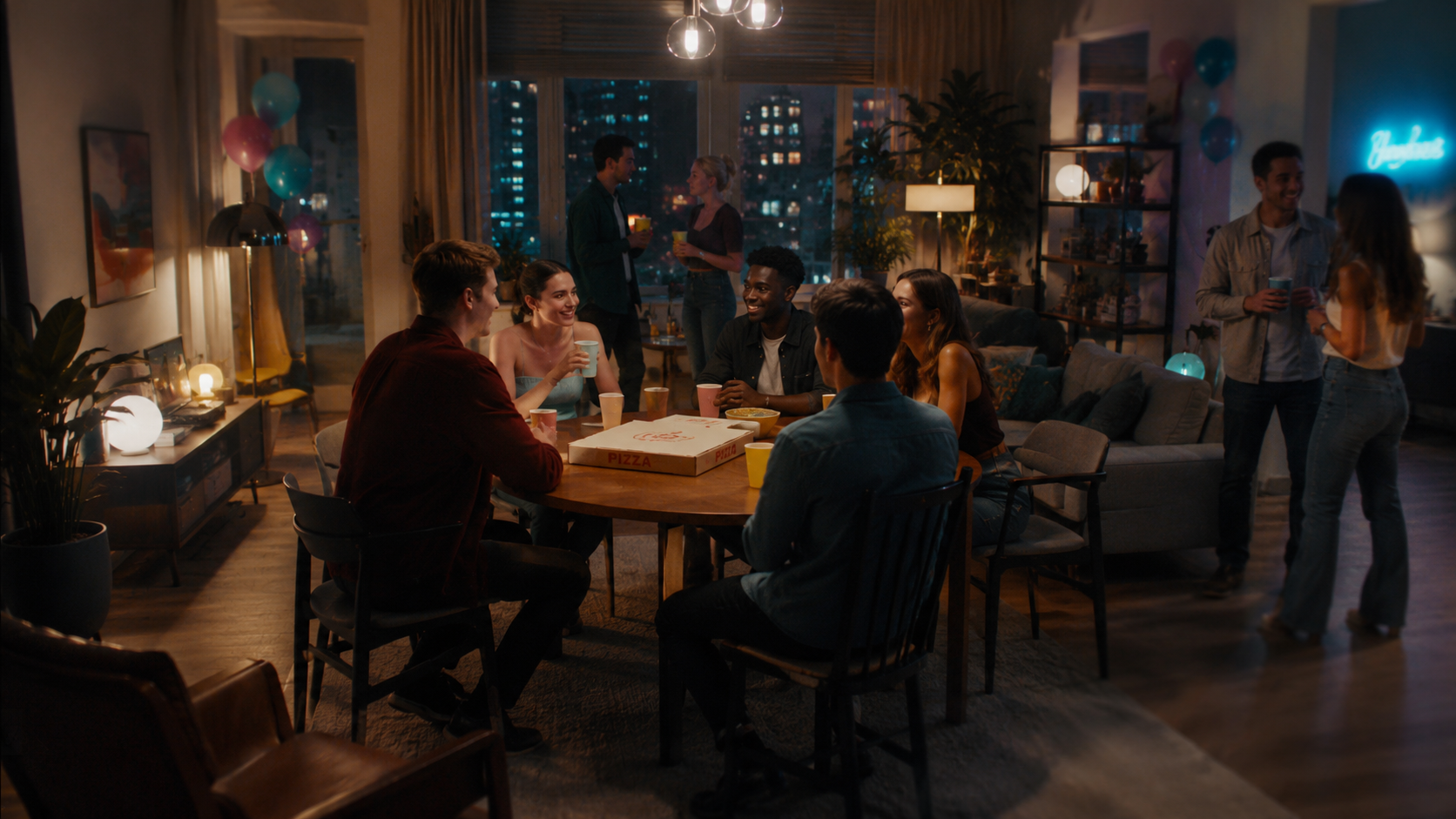
A cinematic wide shot of a cozy modern apartment party at night, stylish Western young adults in their 20s gathered naturally in a warm living room. In the center, a round wooden dining table with a closed pizza box on top, surrounded by a small group of friends sitting and chatting casually. In the background, a few other guests stand near the window and by the sofa, holding drinks and talking naturally. Warm practical lamps, soft amber lighting mixed with subtle cool blue city-night window light, balloons, plants, cozy sofa, modern decor, realistic skin tones, soft contrast, commercial lifestyle photography mood, natural candid expressions, realistic details, beautiful depth, cinematic film still, high-end food advertisement style, 16:9.Step 2: Add the Product Branding (Nano Banana 2)
Edit only the pizza box — people, room, lighting, and camera angle stay locked. This is your Main Scene (the final branded reference).
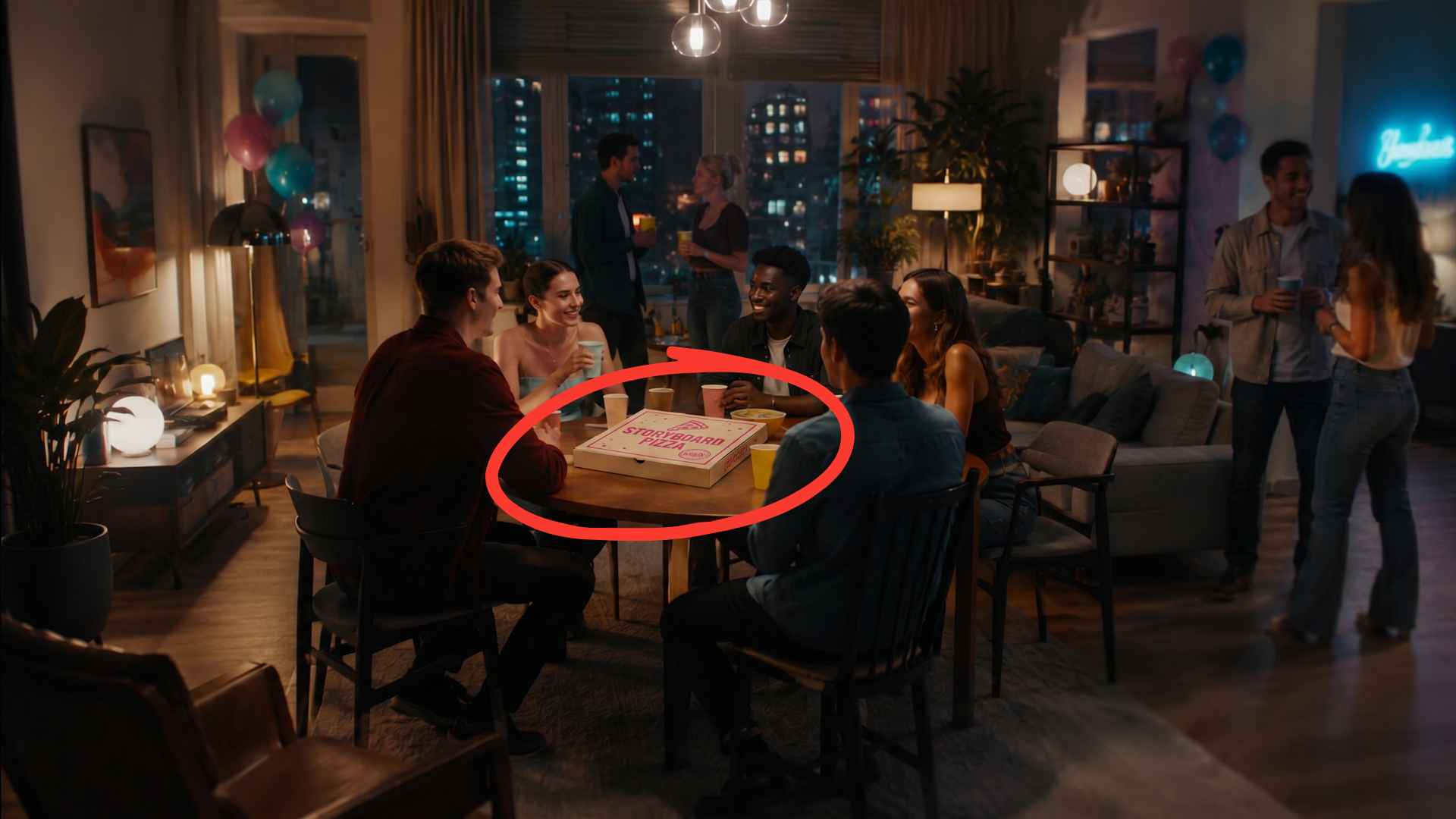
Edit only the closed pizza box on the table. Keep the pizza box fully closed, flat on the table, and in the exact same position and perspective as the original image. Add a professionally designed pink pizza packaging print directly onto the top lid of the closed box. The brand name must read exactly "STORYBOARD PIZZA" in bold pink lettering. Include a small pizza slice icon, thin border frame, circular stamp graphic, and subtle playful decorative dots, all printed in pink ink on the natural cardboard box. Make it look like real printed pizza box packaging, not a sticker or poster. Preserve the original box shape, flat lid, table contact shadow, lighting, people, room, and camera angle unchanged. Do not open, tilt, lift, rotate, enlarge, or move the box.Step 3: Build a Navigable 3D Scene (Magnific 3D)
Open Magnific 3D: https://www.magnific.com/app/tools/3d → 3D Scenes → Location → Image. Upload Main Scene.
Goal: enough depth to fly a camera through the existing scene — not a redesigned room.
Convert the uploaded image into a navigable 3D scene while preserving the original image as closely as possible. Keep the same apartment party room, same people placement, same warm cinematic lighting, same furniture, same table, same closed STORYBOARD PIZZA box, same balloons, same windows, same sofa area, and same cozy night party atmosphere.

Do not redesign the room. Do not remove people. Do not create an empty spacious room. Do not change the lighting, color tone, or skin tones. The scene should remain a realistic young adult apartment party, not a clean showroom or restaurant.

Build enough 3D depth for a virtual camera to move through the existing scene: starting from the left/front side of the room, flying past the friends around the table, moving close to the closed STORYBOARD PIZZA box, orbiting around the table, and ending above the pizza box area. Preserve the pizza box as the hero object at the center of the table.- Missing or simplified people in the 3D scene is normal — this scene is for camera movement, not final visuals.
Step 4: Record the Camera Guide
https://www.skool.com/storyboard
In the Magnific 3D preview, move the camera through the scene: wide view → toward the table → orbit the pizza box → finish top-down hero. Screen record that move.
That recording is your Camera Guide — the movement reference for Seedance 2.0.
Step 5: Generate the Final Video (Seedance 2.0)
On dreamina.capcut.com → Omni Reference. Upload Main Scene (visual reference) + Camera Guide (movement reference).
Use the uploaded video as the main reference for camera movement, pacing, scene style, and shot structure. Keep the same warm apartment party, same friends around the table, same STORYBOARD PIZZA box, same wide-angle Hyper POV feeling, and one continuous long take.

Create a smoother and more polished version of this shot. The camera should move through the party, approach the pizza table, orbit around the STORYBOARD PIZZA box, pass close to friends' faces, hands, cups, shoulders, and table objects, then rise into a clean top-down hero view of the open pizza box.

Do not add a final spiral dive. Do not add a corkscrew camera move. Do not add hands reaching in to grab pizza. The ending should be a clean overhead hero shot, not an action grab moment.
Camera flow
Start wide in the apartment party room. Move toward the central table with the closed STORYBOARD PIZZA box. Orbit around the table while staying close to the pizza box and friends. People smile, laugh, lean in, and naturally react to the camera and pizza. The pizza box opens naturally near the end. The camera rises above the table into a stable top-down view, showing the open STORYBOARD PIZZA box with hot pepperoni pizza centered in frame and the pink branding visible on the lid.

Keep the pizza table as the center of gravity throughout the shot. Do not drift away from the table. Keep warm realistic apartment lighting, natural skin tones, soft cinematic contrast, wide-angle lens, natural motion blur, and smooth long-take movement.
Avoid
spiral dive, corkscrew ending, hands grabbing pizza, people covering the pizza, closed-box ending, pizza off-center, random camera roll, awkward tilts, jump cuts, changed room, missing people, changed skin tones, harsh orange lighting, misspelled STORYBOARD PIZZA, extra text, distorted hands, distorted faces, insect, mosquito, drone, insect sound.Full workflow summary
- GPT Image 2: Generate the Original Scene.
- Nano Banana 2: Edit only the box → branded Main Scene.
- Magnific 3D: Rebuild Main Scene as a navigable 3D scene.
- Screen record the camera move inside 3D → Camera Guide.
- Seedance 2.0 (Omni Reference): Main Scene + Camera Guide → final polished shot.
The key: The 3D scene exists only to author the camera move. The movement is directed, not guessed.